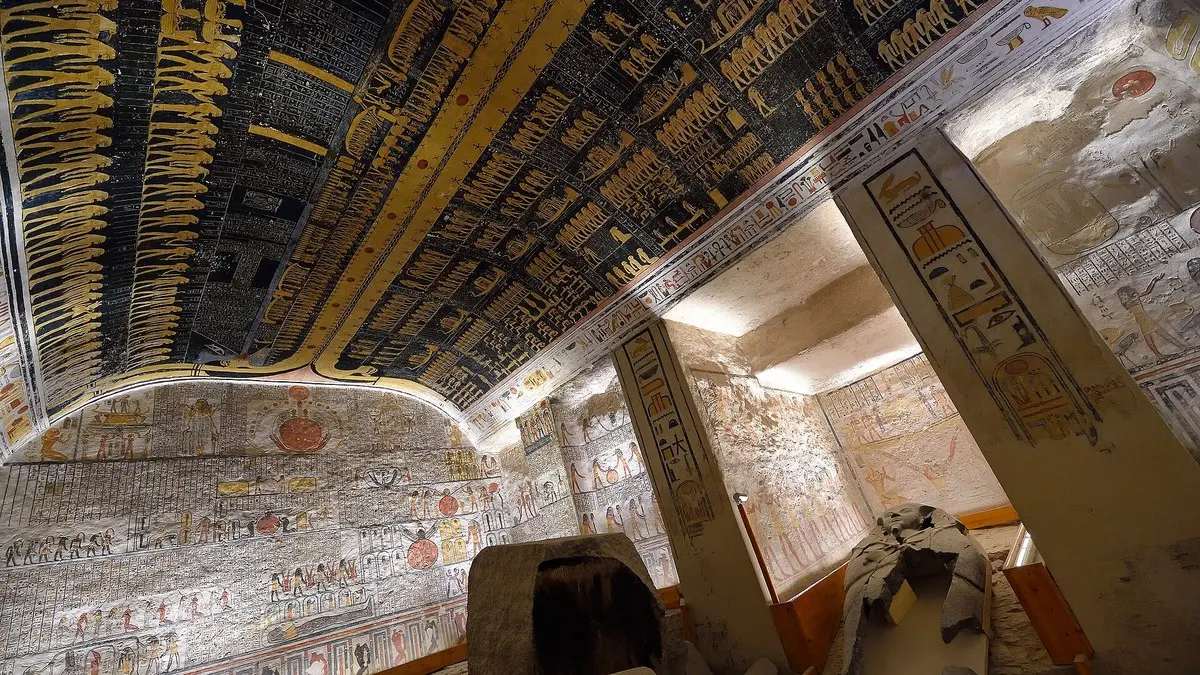
Carved deep into the sun-bleached limestone cliffs beneath the natural pyramid peak of al-Qurn, the Valley of the Kings stands as humanity’s richest subterranean royal necropolis on the West Bank of Luxor. Between the sixteenth and eleventh centuries BCE, pharaohs of Egypt’s Eighteenth, Nineteenth, and Twentieth Dynasties abandoned exposed pyramids for hidden rock-cut corridors painted with luminous astronomical ceilings and sacred underworld texts. Planning around rotating open shafts, optional burial chambers, and early desert temperatures guarantees a rewarding journey through Ancient Thebes.
Visitor Reference Contents
How Standard Admission and Tomb Rotations Work
Archaeologists divide the royal canyon into the East Valley, where visitors gather, and the secluded West Valley, called the Valley of the Monkeys. Rather than opening all sixty-three shafts simultaneously, Egypt’s Supreme Council of Antiquities rotates roughly eight to ten royal corridors on the general pass while resting others to stabilize humidity and limestone salt levels.
Your general entry pass covers any three open tombs from the active roster, scanned at each doorway. Three celebrated shafts require separate add-on tickets purchased at the entrance hall before boarding the shuttle: KV62 (Tutankhamun), KV17 (Seti I), and KV9 (Ramesses V and VI). Custodians cannot sell upgrades inside the upper wadi plaza, so choose your add-ons at the main counter first.
6 Best Royal Tombs in the Valley of the Kings
Combining three standard corridors with one conservation upgrade prevents visual repetition across dynasties. Prioritize these six royal burial chambers:
- KV2 (Ramesses IV — Standard): Steps from the tram stop, this wide corridor preserves bright yellow ceilings depicting the Book of Nut alongside a colossal red-granite sarcophagus.
- KV11 (Ramesses III — Standard): Famous as the Harper’s Tomb, KV11 showcases sunken reliefs, side annexes illustrating royal bakeries and Nile boats, and scenes of blind harpists playing before the gods.
- KV6 (Ramesses IX — Standard): Accessible without steep stairs, KV6 opens onto broad halls decorated with star clocks, cobras, and nocturnal solar barque voyages from the Book of the Earth.
- KV8 (Merenptah — Standard): Descending through pillared halls, Merenptah’s shaft ends in a vaulted chamber housing a monumental granite outer sarcophagus lid sculpted as Osiris.
- KV62 (Tutankhamun — Add-On): Unearthed nearly intact by Howard Carter in November 1922, this four-room shaft displays Tutankhamun’s linen-wrapped mummy inside a climate-controlled case beside the painted twelve-baboon wall.
- KV17 (Seti I — Premium) or KV9 (Ramesses V and VI — Add-On): KV17 represents the height of New Kingdom raised limestone carving and vaulted astronomy, while KV9 offers a lower-cost add-on famed for its double sky ceiling of Nut.
“With its royal rock-cut tombs and mortuary temples along the western desert escarpment, Ancient Thebes preserves an unmatched material record of New Kingdom Mediterranean civilization.” — Heritage inscription summary via UNESCO World Heritage Centre — Ancient Thebes and its Necropolis.
West Bank Logistics, Ferry Crossings, and Reference Table
Arriving at dawn beats tour coaches from Red Sea resorts. Independent travelers on Luxor’s East Bank can board the public ferry opposite Luxor Temple for a ten-minute Nile crossing to Gezira el-Bairat, then take a twenty-minute taxi into the hills; private cars use the southern Luxor Nile Bridge. Because Egyptian monument gates operate cashless Visa and Mastercard terminals, visitors tracking currency updates on El Tahrir News English Edition — including Interest Rates in Egypt 2026: 3 Priorities Beyond Cuts — should carry a contactless card enabled for international use.
| Planning Factor | Verified Visitor Details | Practical Field Advice |
|---|---|---|
| Location | East Valley beneath al-Qurn peak, West Bank of Luxor | Pair with Hatshepsut Temple 10 minutes over the ridge |
| Operating Hours | Daily 6:00 AM to 5:00 PM winter (6:00 PM summer) | Enter at 6:00 AM for cooler canyon air |
| Ticket Structure | Standard pass covers 3 tombs; optional KV62, KV9, KV17 | Card-only payment at the main Visitor Center |
| Internal Shuttle | Electric tram (taf-taf) links Visitor Center and gate | Keep your paper tram stub for the return ride |
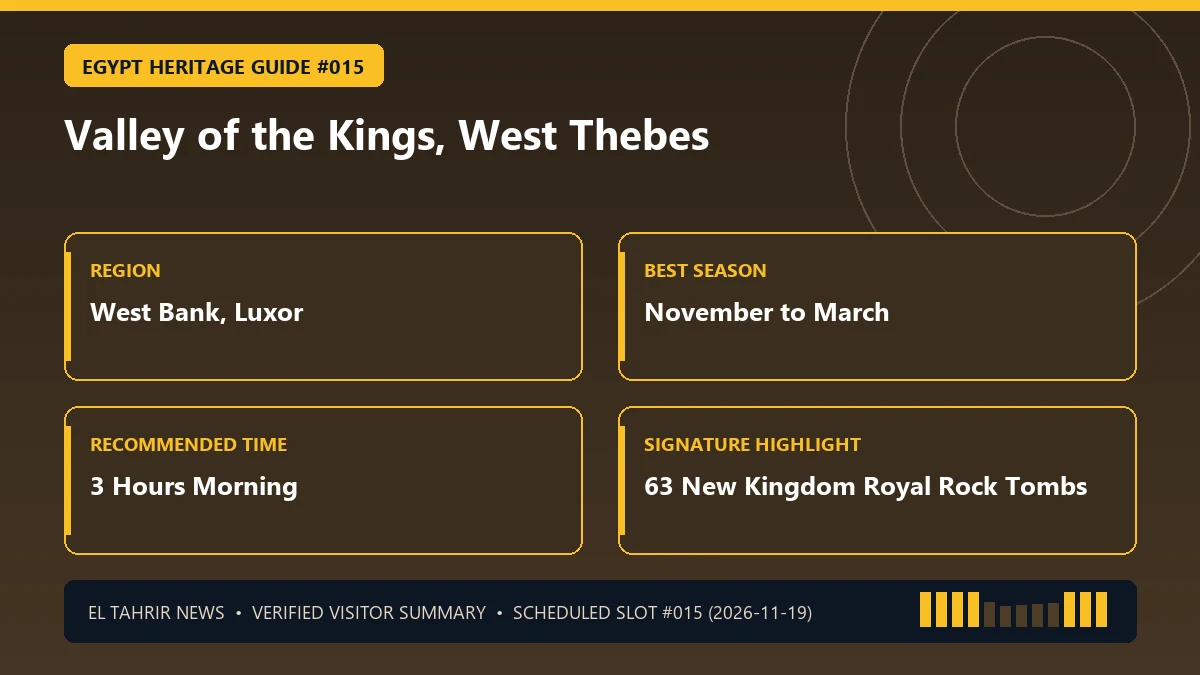
| Recommended Time | 2.5 to 3.5 hours depending on optional chambers | Pack 1.5 liters of water, linen attire, and sun hat |
Visitor Center, Electric Tram, and Photography Rules
Pause at the subsurface scale model inside the Visitor Center before riding the electric tram uphill to see how shafts bend around geological faults. Licensed guides cannot lecture inside tomb corridors to prevent moisture buildup, so review the illustrated panels under the shaded canopies outside each entrance first.
Non-flash smartphone photography is free inside standard tombs and most add-on chambers when flash LEDs stay off. Dedicated cameras and tripods require separate authorization at the checkpoint.
Frequently Asked Traveler Questions
Are Tutankhamun’s gold mask and treasures inside tomb KV62?
No; the golden funerary mask, shrines, chariots, and jewelry discovered in 1922 are displayed in Cairo at the Grand Egyptian Museum. Inside KV62, visitors see the painted chamber, the gilded outer coffin, and Tutankhamun’s royal mummy.
Is the necropolis manageable for visitors with limited mobility?
The Visitor Center, electric tram, and upper wadi paths have paved ramps, while wide corridors like KV2 and KV6 feature wooden walkways with handrails. Deeper shafts like KV8 or KV17 involve steep staircases and warm air.
Which months offer the best weather for West Bank sightseeing?
November through early March brings crisp mornings between 15 and 24 degrees Celsius. In April, May, or October, enter at 6:00 AM and wrap up before 10:30 AM to avoid reflected cliff heat.
Financial Disclaimer: Admission tiers, conservation surcharges, shuttle fares, and cashless payment rules are set by Egypt’s Ministry of Tourism and Antiquities and are presented for informational purposes only.

