

Strong Egypt Tourism Arrivals 2026 reached 14.4 million international visitors between January and September, putting the country’s hospitality sector firmly on pace toward its 20 million-plus full-year target. In this market briefing by El Tahrir News English Edition, we analyze the aviation upgrades, Nile cruise occupancy patterns, Red Sea resort demand, and Grand Egyptian Museum milestone driving national growth toward Egypt’s 30 million annual visitor strategy by 2030.
Table of Contents
Nine-Month Visitor Volume and the 2030 Growth Roadmap
Recording 14.4 million international visitors across the first nine months of 2026 signals sustained momentum across both cultural and leisure travel segments. Rather than relying on a single peak winter window, arrival flows remained resilient from January through September, keeping Egypt’s tourism sector aligned with its 20 million-plus full-year benchmark. Long-term national planning links this annual expansion directly to the government’s broader target of welcoming 30 million annual visitors by 2030.
Cultural travel anchored around Greater Cairo gained major momentum after the Grand Egyptian Museum (GEM) near Giza surpassed 5.2 million visitors in its first full year of operations, an attraction detailed further in our 2026 Grand Egyptian Museum visitor guide. Simultaneously, marine leisure travel continued performing strongly along coastal zones covered in our overview of premier Red Sea diving destinations, demonstrating balanced demand between heritage cities and beachfront resorts.
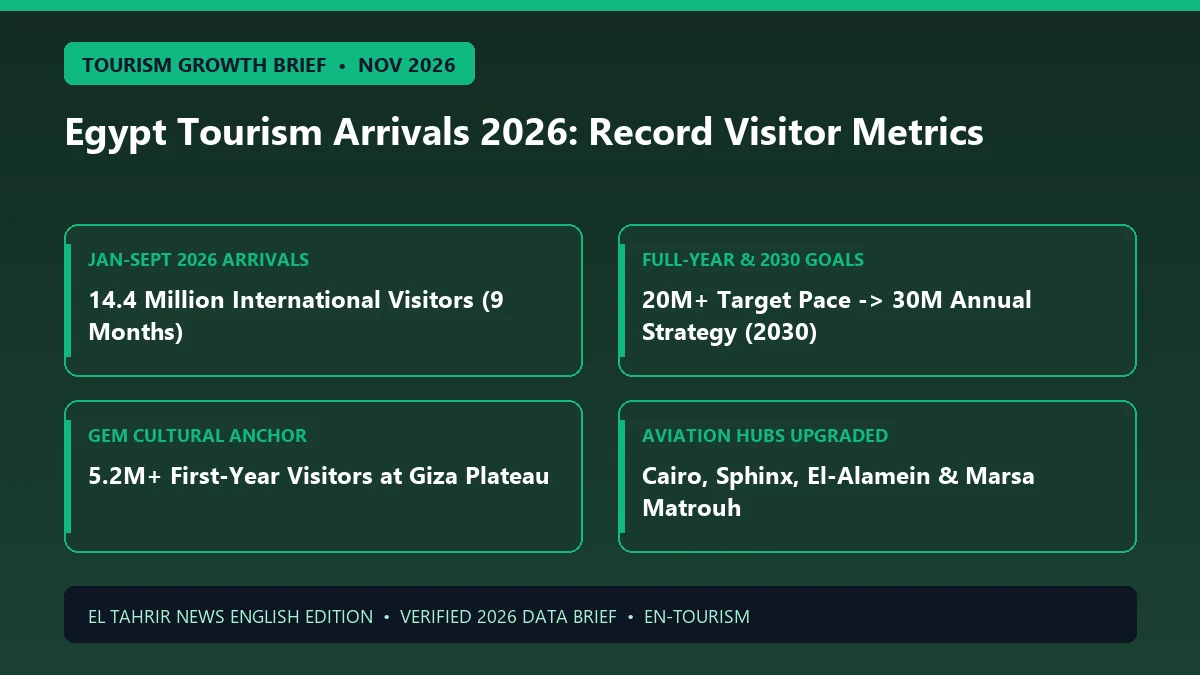
Five Drivers Behind Record Egypt Tourism Arrivals 2026
Industry data from the first three quarters highlights five structural pillars sustaining Egypt’s hospitality rebound across international source markets:
- Grand Egyptian Museum Scale: Surpassing 5.2 million visitors in its first full year cemented the GEM near Giza as a high-capacity global cultural anchor boosting Greater Cairo stays.
- Nile Cruise and High-Speed Rail Synergy: Strong Nile cruise occupancy between Luxor and Aswan continues pairing heritage river travel with expanding high-speed rail corridors.
- Red Sea Resort Demand: Marsa Alam, Hurghada, and Sharm El-Sheikh maintained robust coastal occupancy across European and regional charter networks.
- Multi-Gateway Aviation Capacity: Rapid expansion across Cairo, Sphinx, El-Alamein, and Marsa Matrouh airports distributes incoming flights closer to final resort and cultural destinations.
- Expanding Hotel Pipelines: Accelerated hospitality development continues adding multi-tier room inventory to accommodate the jump from 20 million-plus toward 30 million annual guests by 2030.
Passing 14.4 million international arrivals in nine months reflects coordinated capacity expansion across aviation gateways, hotel pipelines, Nile river cruises, and the 5.2 million-visitor Grand Egyptian Museum milestone.
Airport Expansions, Hotel Pipelines, and High-Speed Rail
Tourism planners tracking national visitor growth emphasize that sustaining 20 million-plus annual travelers depends on matching airlift capacity with ground mobility and room supply. Official travel resources published by the Egyptian Tourism Authority — Experience Egypt reflect growing regional connectivity across Cairo, Sphinx, El-Alamein, and Marsa Matrouh airports. Opening direct access through Sphinx International Airport near Giza and Mediterranean coastal hubs reduces domestic transfer times, while expanding hotel pipelines and high-speed rail expansion link coastal cities, Cairo, and Upper Egypt river corridors more efficiently.
| Tourism Benchmark | Verified 2026 Figure or Asset | Strategic Role Toward 2030 |
|---|---|---|
| Jan-Sept 2026 Volume | 14.4 million international visitors | Confirms strong nine-month trajectory across key source markets |
| Full-Year and 2030 Goals | 20M+ annual pace; 30M target by 2030 | Guides national hotel pipeline and aviation capacity investments |
| Grand Egyptian Museum (GEM) | 5.2 million+ visitors in first full year | Anchors Greater Cairo cultural stays near the Giza plateau |
| Coastal and River Hubs | Marsa Alam, Hurghada, Sharm El-Sheikh; Luxor-Aswan cruises | Balances year-round beach demand with Upper Egypt river occupancy |
| Aviation and Rail Expansion | Cairo, Sphinx, El-Alamein, Marsa Matrouh; high-speed rail | Distributes international arrivals and streamlines intercity transfers |
Nile Cruises and Red Sea Coastal Demand Dynamics
Beyond Greater Cairo’s flagship museum milestone, regional dispersion remains central to Egypt’s hospitality resilience. Strong Nile cruise occupancy between Luxor and Aswan underscores steady demand for multi-day river itineraries, where travelers combine floating accommodation with Upper Egypt heritage excursions. Linking river ports with high-speed rail expansion is designed to shorten travel times between Red Sea resorts, Cairo, and southern Nile embarkation points.
Along the eastern coastline, Marsa Alam, Hurghada, and Sharm El-Sheikh continue anchoring Egypt’s warm-weather resort economy. Consistent charter arrivals and repeat European and regional visitors keep coastal occupancy healthy outside traditional winter highs, while parallel airport and hotel expansion on the Mediterranean North Coast diversifies seasonal demand across multiple coastlines.
Frequently Asked Questions on Egypt’s Tourism Outlook
What milestones shaped Egypt’s tourism growth through September?
Egypt welcomed 14.4 million international visitors from January through September 2026, putting the industry on track toward its 20 million-plus full-year goal while the Grand Egyptian Museum near Giza passed 5.2 million first-year visitors.
Which Egyptian airports are expanding to handle rising visitor traffic?
Aviation and hotel capacity expansion spans Cairo, Sphinx, El-Alamein, and Marsa Matrouh airports, complementing established Red Sea gateways serving Hurghada, Sharm El-Sheikh, and Marsa Alam.
What is Egypt’s long-term annual visitor target for 2030?
National tourism strategy targets 30 million annual international visitors by 2030, supported by expanding hotel pipelines, Nile cruise corridors between Luxor and Aswan, and high-speed rail connectivity.
Traveler Advisory: Flight schedules across Cairo, Sphinx, El-Alamein, and Marsa Matrouh airports, Nile cruise embarkation calendars, and museum entry timings remain subject to seasonal adjustments by Egyptian authorities; verify itineraries directly before travel.

