
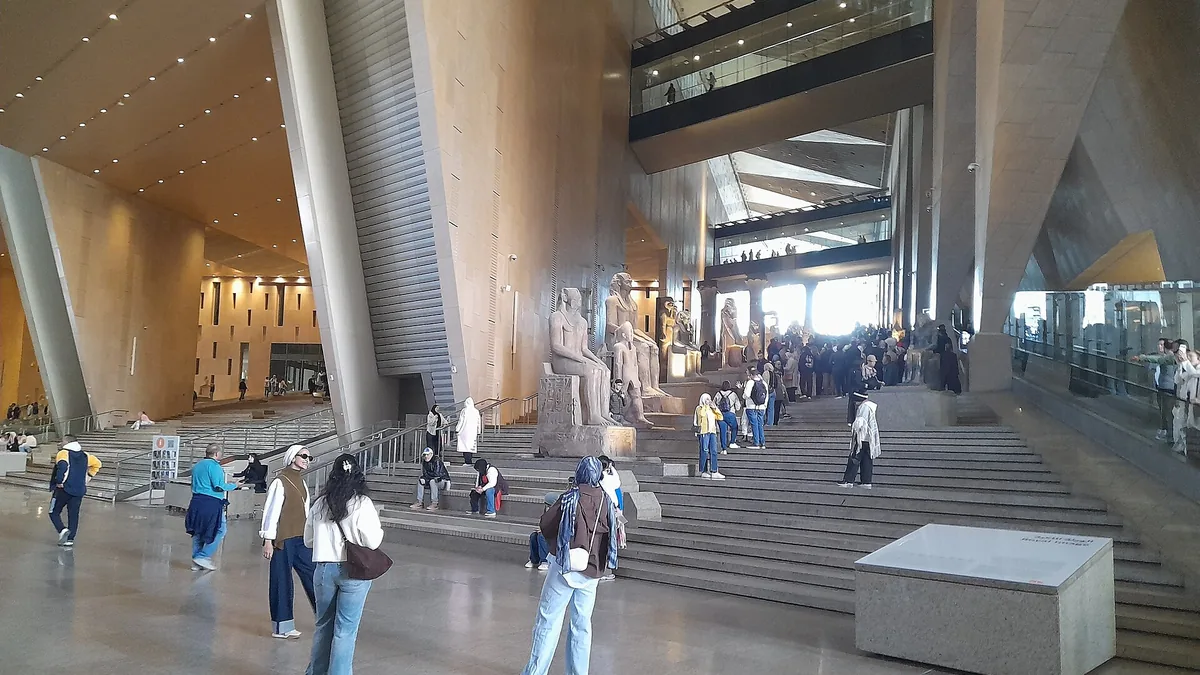
Egyptian Museum cultural tourism reached a transformative milestone in 2026 as the Grand complex overlooking the Giza Pyramids expanded full public access, uniting monumental pharaonic galleries, advanced restoration laboratories, and bilingual youth heritage programs across one landmark campus.
📋 Table of Contents
📊 Key Figures & Data Summary — Egyptian Museum
| Cultural Highlight | Signature Feature | Visitor Experience |
|---|---|---|
| Grand Atrium | Colossal Ramesses II statue | Climate-controlled monumental entrance hall |
| Grand Staircase | Four thematic historical tiers | Ascends toward panoramic Pyramid views |
| Tutankhamun Galleries | Over 5,000 royal artifacts | Displayed together for the first time |
| Conservation Center | Specialized timber & linen labs | Safeguards ancient organic artifacts |
| Youth Cultural Outreach | Multilingual digital storytelling | Connects students and global travelers |
Architectural Scale and Egyptian Museum Highlights on the Giza Plateau
Commanding an elevated desert ridge two kilometers from the Great Pyramids, the Grand complex in Giza stands as the largest archaeological museum on Earth dedicated to a single civilization. Its translucent alabaster facade aligns geometrically with the nearby pyramids of Khufu and Menkaure, welcoming international travelers and domestic cultural delegations into an airy, sun-dappled atrium.
Anchoring that entry plaza is the towering red-granite statue of King Ramesses II, relocated carefully from central Cairo and flanked by the suspended obelisk courtyard. Unlike older crowded display rooms, wide climate-regulated walkways allow tour groups and independent visitors to examine millennia-old stonework in serene comfort while accessible ramps accommodate every age group.
Inside the Grand Staircase and Complete Tutankhamun Halls
Ascending the monumental Grand Staircase offers a chronological prelude to Egypt’s dynastic eras, lined with dozens of royal colossi, temple columns, and sacred architectural reliefs culminating in floor-to-ceiling glass framing the Giza Pyramids on the horizon. Above, twelve main chronological galleries trace society, kingship, and craftsmanship from predynastic settlements through the Greco-Roman era.
Crown-jewel attention naturally centers on the Tutankhamun halls, assembling more than 5,000 funerary objects discovered by Howard Carter in 1922 under one roof. Nearby, purpose-built pavilions preserve King Khufu’s cedar solar boats using vibration-isolated cradles, low-UV lighting, and micro-climate humidity monitoring engineered by specialized Egyptian conservators working inside the adjoining Conservation Center laboratories.
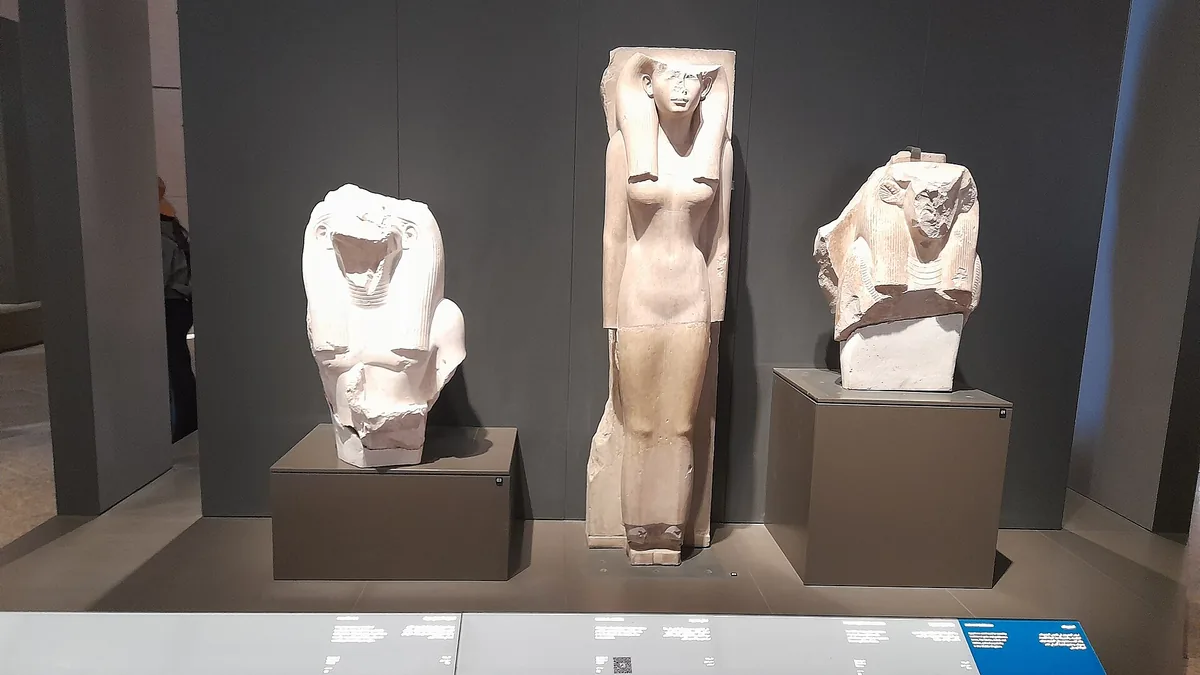
Youth Cultural Engagement and Multilingual Heritage Outreach
Cultural preservation thrives alongside sustained community education. Egyptian civic and youth delegations—including National Youth Foundation visits featured in Cairo reporting and coordinated by volunteer organizer Nourhan Hany Abdel Aziz—underscore how organized educational tours reconnect rising generations with monumental national archaeology and living national craftsmanship.
Producing bilingual Arabic and English digital walkthroughs directly inside Giza’s exhibition halls strengthens historical literacy for university students while projecting welcoming, well-documented Egyptian hospitality to overseas travelers researching 2026 itineraries. Regional field workshops, lecture series, and school ambassador partnerships across Egyptian governorates turn museum access into year-round cultural education rather than a single tourist photo stop.
“Standing inside the sunlit Giza galleries connects millennia of artistic mastery directly with a new generation of cultural ambassadors.”
Smart Visitor Itinerary Combining Giza Monuments and Gallery Tours
Visitors scheduling a cultural day west of Cairo benefit from dedicating at least half a day exclusively to the gallery wings before pairing an early-morning or golden-hour walk across the adjacent Giza plateau. Timed digital entry tickets, multilingual audio guides, curated craft shops, gift bookstores, and shaded dining terraces overlook the ancient desert skyline seamlessly.
Direct road links from Sphinx International Airport and upgraded ring-road corridors shorten transit times for short-stay cultural visitors pairing Giza’s vast new exhibition campus with Luxor Nile cruises, Aswan temples, and Red Sea coastal resorts in a unified multi-destination Egyptian itinerary.
Early arrivals immediately following opening hours enjoy quieter lighting inside the Grand Staircase, effortless access to digital ticket kiosks, unhurried browsing across the Conservation Center viewing windows, and serene morning photographs overlooking the adjacent Giza Pyramids before midday tour buses reach the main entry courtyard.
Travel planners booking group passes should inspect seasonal Ramadan or winter opening calendars online ahead of departure, pair comfortable walking footwear with shaded stone-gallery rest stops, and reserve extra afternoon time for nearby craft ateliers and Sphinx highway connections.
Frequently Asked Questions About Egyptian Museum
Where is the Grand Giza complex located relative to the Pyramids?
It sits roughly two kilometers northwest of the Great Pyramids plateau in Giza, with panoramic windows overlooking Khufu and Menkaure.
What makes the Tutankhamun exhibition historically unprecedented?
For the first time since the tomb’s 1922 discovery, over 5,000 artifacts from the young pharaoh’s burial treasure are curated together in dedicated halls.
How much time should travelers reserve for the museum galleries?
Planners recommend allocating three to four hours to explore the atrium, Grand Staircase, chronological wings, and royal boat pavilions comfortably.
How do youth heritage delegations support Egypt’s cultural tourism?
Student and civic groups conduct educational tours and create bilingual digital guides that promote accurate archaeological appreciation worldwide.
Related Coverage & Official Sources: Follow ongoing reporting on El Tahrir News English Edition. Reference data in this report is verified against UNESCO Cultural Heritage.
Read Also in This Section:

