
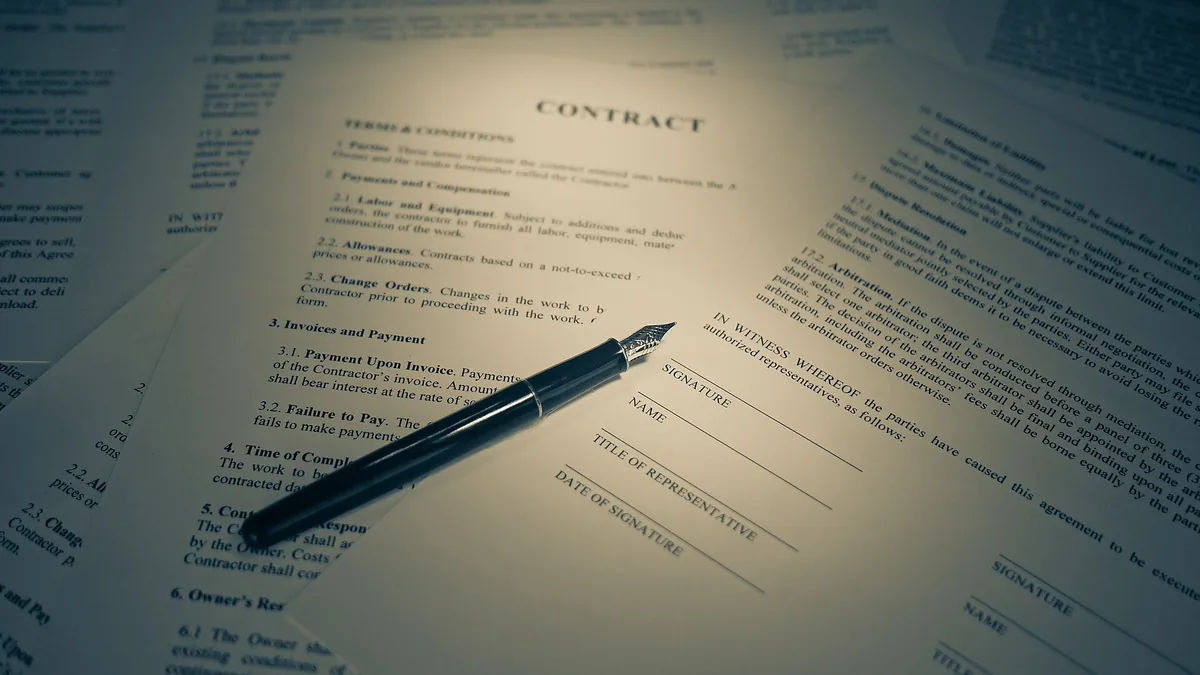
AI Contracts have entered mainstream corporate procurement and commercial leasing throughout 2026, prompting international arbitration specialists to warn that fluent automated drafting cannot substitute for verified mutual consent, statutory e-signature controls, and strict data-confidentiality governance.
📋 Table of Contents
📊 Key Figures & Data Summary — AI Contracts
| Legal Governance Pillar | Statutory / Doctrinal Anchor | Operational Risk |
|---|---|---|
| Mutual Contractual Intent | Civil Code Art. 89 (Law 131/1948) | Fluent clauses may miss true party intent |
| Binding Enforcement | Civil Code Art. 147 & 148 | Algorithmic error rarely voids signed terms |
| Electronic Evidentiary Force | E-Signature Law 15/2004 (Art. 14-18) | Drafting alone lacks cryptographic verification |
| Data & Secret Protection | Data Protection Law 151/2020 | Pasting private deals exposes trade secrets |
Why Fluent AI Contracts Do Not Guarantee Valid Legal Consent
Legal practitioner and international arbitrator Counselor Ahmed Ghaloush notes a widespread misconception among commercial teams adopting generative software: polished legal phrasing does not make an agreement balanced or legally sound. Under established civil law principles—such as Article 89 of Egypt’s Civil Code No. 131 of 1948—a binding contract emerges from matching expressions of genuine party intent rather than decorative terminology.
Automated language engines optimize statistical fluency, not commercial alignment. Consequently, an unreviewed sales, supply, or partnership draft can look immaculate on paper while smuggling in lopsided indemnity caps, unintended financial covenants, or jurisdiction clauses incompatible with governing national statutes. Specialized counsel evaluates risk allocation, currency escalation mechanisms, and statutory notice timelines before ink meets paper.
Distinguishing Automated Drafting From Valid E-Signatures
Organizations frequently conflate software document assembly with legally enforceable electronic contracting. Egypt’s E-Signature Law No. 15 of 2004—specifically Articles 14, 15, and 18 overseen alongside ITIDA—grants digital records full evidentiary weight only when cryptographic control, signer identity binding, and tamper-detection integrity standards are met.
Simply generating a PDF inside an artificial intelligence prompt confers zero statutory authentication. Equally critical, once an authorized officer signs a flawed draft, Articles 147 and 148 preserve binding pacta sunt servanda obligations unless strict legal thresholds for actionable mistake or fraud under Articles 120 to 125 can be proven in court or international arbitration. Separating liability between the careless signing enterprise and the third-party software vendor depends heavily on causation, duty-of-care disclaimers, and applicable service warranties.

Confidentiality and Data-Leakage Exposure in Commercial Teams
Drafting mistakes are only half of the enterprise governance equation. Employees uploading unredacted supplier pricing sheets, client records, or M&A term sheets into public generative tools create immediate regulatory and trade-secret hazards across cross-border operations and vendor procurement pipelines.
Under personal-data frameworks such as Egypt’s Personal Data Protection Law No. 151 of 2020 and comparable regional statutes, controllers carry strict duties over lawful processing and third-party disclosure. Without zero-retention enterprise APIs and clear staff acceptable-use policies, hasty prompt engineering can breach strict non-disclosure commitments and regulatory privacy mandates before commercial negotiations even close.
Procurement departments increasingly embed automated vendor questionnaires verifying where model telemetry travels, whether prompts enter public retraining datasets, and which regional courts exercise oversight over digital service disruptions affecting active transactions.
“Sound contracts are measured by lawful formation, balanced risk allocation, and enforceable rights—not by how effortlessly software generated the prose.”
Four Enterprise Guardrails for Safe Legal Automation
Arbitration experts emphasize structured collaboration rather than outright prohibition: generative software accelerates clause comparison, risk matrices, and first-pass issue spotting when supervised closely by licensed lawyers. To safeguard commercial balance sheets throughout 2026, corporate compliance teams should enforce four verifiable controls:
- Require human counsel sign-off on liability caps, termination triggers, payment milestones, and governing law clauses.
- Deploy isolated zero-retention enterprise environments rather than consumer chatbots whenever reviewing confidential agreements.
- Verify that final execution runs through accredited e-signature infrastructure supporting tamper-evident verification.
- Maintain internal audit logs documenting lawyer review milestones prior to board, supplier, or cross-border execution.
Frequently Asked Questions About AI Contracts
Can a company void a signed contract because generative software wrote an error?
Simply blaming automated drafting rarely releases a signing party from binding obligations unless statutory criteria for legal mistake or fraud are strictly satisfied.
Does software generation equal a legally valid electronic contract?
No. Statutory e-signature frameworks require verified signer identity, exclusive signing-key control, and post-signature tamper detection.
What data risks arise when employees paste contracts into public chatbots?
Uploading unredacted client files or pricing schedules can breach commercial NDAs, leak trade secrets, and violate personal data protection statutes.
How should legal departments deploy generative tools safely in 2026?
Teams should use private enterprise environments for first-pass triage and clause indexing while keeping licensed legal review mandatory before execution.
Related Coverage & Official Sources: Follow ongoing reporting on El Tahrir News English Edition. Reference data in this report is verified against World Intellectual Property Organization (WIPO).
Read Also in This Section:

