
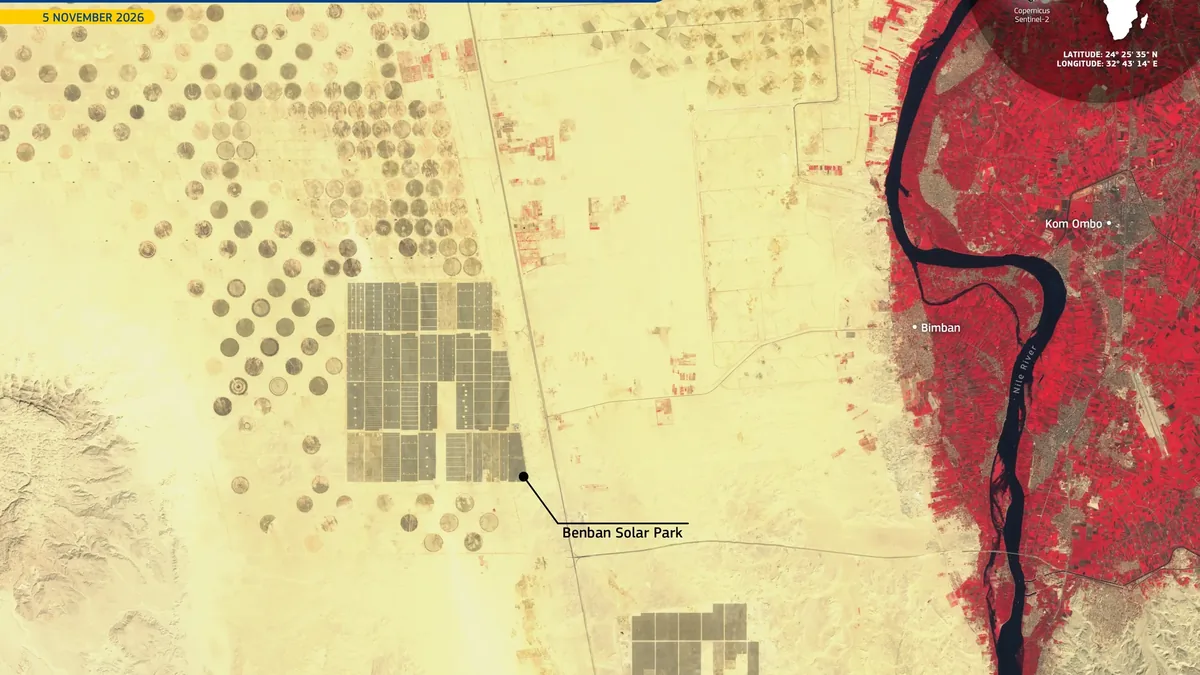
Solar Energy deployment across Egypt is accelerating grid resilience in 2026 as 1,200 megawatts of utility-scale photovoltaic capacity—paired with 720 megawatt-hours of integrated battery storage—connects clean desert generation directly to the national electricity transmission backbone.
📋 Table of Contents
📊 Key Figures & Data Summary — Solar Energy
| Grid Expansion Metric | Verified Project Scope | Strategic Value |
|---|---|---|
| Solar Generation Added | 1,200 MW photovoltaic capacity | Displaces fossil-fuel thermal generation |
| Battery Storage (BESS) | 720 MWh dispatchable reserves | Stabilizes peak evening grid demand |
| Development Consortium | Masdar, Infinity Power, Hassan Allam | Cross-border private infrastructure capital |
| Primary Corridors | Benban (Aswan) & Gulf of Suez | World-class irradiance & wind synergy |
| Clean Share Targets | 42% by 2030 / 65% by 2040 | National Ministry of Electricity roadmap |
Commissioning 1,200 MW Solar Energy Capacity and Battery Storage
Following coordination overseen by Minister of Electricity and Renewable Energy Dr. Mahmoud Esmat alongside Deputy Minister Sabah Mashali, utility construction accelerated across Upper Egypt and coastal corridors to inject 1,200 megawatts of fresh clean generation into national substations. Rather than standing alone as intermittent daytime power, these installations incorporate 720 megawatt-hours of grid-scale battery storage.
Integrating utility battery banks solves renewables’ classic sunset challenge. Excess midday electricity captured across Aswan’s Benban belt stores directly inside lithium-iron-phosphate containers and dispatches smoothly into evening residential and industrial peaks, smoothing voltage frequency across high-voltage lines while lowering thermal spinning reserve requirements.
Private Consortium Execution: Masdar, Infinity Power, and Hassan Allam
Delivering gigawatt-class clean assets depends heavily on international private-sector balance sheets. The strategic partnership uniting the UAE’s Masdar, Egyptian clean-energy developer Infinity Power, and domestic engineering giant Hassan Allam Construction illustrates how sovereign policy frameworks mobilize foreign direct investment without straining public budgets.
Long-term power purchase agreements provide predictable foreign-currency revenues for international development banks while transferring high-voltage substation integration skills, inverter diagnostics, automated tracking calibration, and plant maintenance roles directly to Egyptian engineering graduates working across Upper Egypt.
Five Macro Wins for Fuel Savings, Industry, and Export Power
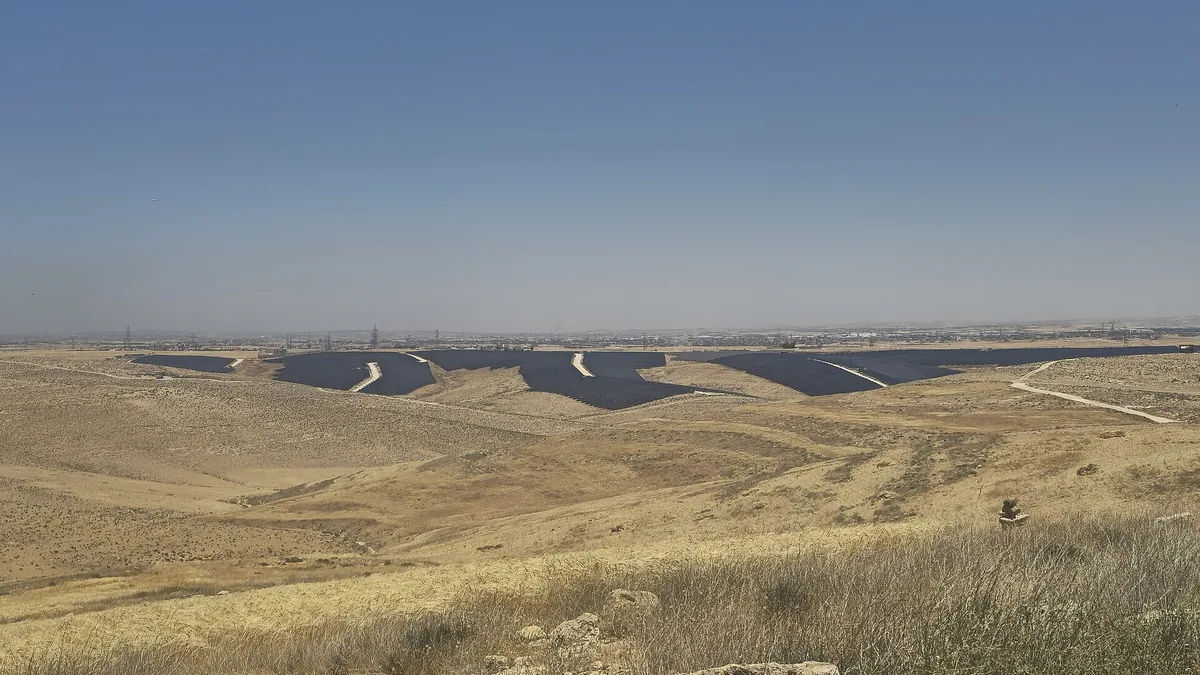
Grid modernization delivers measurable economic dividends well beyond environmental compliance. First, displacing natural gas and heavy fuel oil inside legacy power plants reduces state energy import bills and frees hydrocarbons for higher-margin export or petrochemical manufacturing. Second, industrial zones gain cleaner electricity profiles demanded by European Carbon Border rules.
Third, Benban and Gulf of Suez hybrid corridors create regional supply-chain jobs in mounting structures, cabling, and logistics. Fourth, expanded renewable baseload supports green hydrogen electrolyzers around the Suez Canal Economic Zone. Fifth, deeper generation buffers strengthen peak-summer reliability across fast-growing urban districts and agricultural reclamation projects.
“Pairing 1,200 MW of desert solar arrays with 720 MWh battery banks transforms intermittent sunshine into dispatchable evening grid stability.”
Pathway Toward Egypt’s 42% Clean Power Target by 2030
Ministry planners anchor long-term grid expansion around two clear milestones: generating over 42 percent of national electricity from renewable sources by 2030 and reaching 65 percent by 2040. Achieving those benchmarks requires pairing utility photovoltaic fields with high-capacity Gulf of Suez wind turbines and cross-border transmission interconnectors linking North Africa, Arabia, and Europe.
Substation modernization, automated grid forecasting software, and regional high-voltage direct-current links—including planned interconnections spanning Saudi Arabia and Mediterranean Europe—allow utility operators to balance cloud cover fluctuations smoothly across thousands of kilometers while positioning Egypt as an indispensable clean-power corridor.
Training cohorts across Upper Egypt technical institutes also benefit directly from multi-gigawatt field rollouts, mastering high-voltage transformer diagnostics, thermal drone inspections, SCADA telemetry calibration, and lithium-iron-phosphate safety maintenance protocols that anchor well-paid regional engineering careers across governorates from Minya to Aswan. Industrial parks neighboring newly upgraded grid corridors gain reliable medium-voltage feeders tailored for glass processing, agricultural cold storage, desalination facilities, and automated export packaging lines.
As global clean-tech manufacturing scales down panel and storage cell costs in 2026, Egypt’s sun-drenched desert terrain remains one of the Mediterranean’s most competitive hubs for low-cost renewable electricity, domestic grid resilience, and clean industrial exports.
Frequently Asked Questions About Solar Energy
How much battery storage accompanies Egypt’s 1,200 MW solar rollout?
The consortium-built clean-power package integrates 720 MWh of utility battery energy storage to dispatch solar electricity after sunset.
Which companies form the strategic development consortium?
Construction and project delivery combine UAE renewable leader Masdar, Infinity Power, and Egypt’s Hassan Allam Construction.
What are Egypt’s official clean electricity targets for 2030 and 2040?
National electricity planners target raising renewable generation share past 42 percent by 2030 and 65 percent by 2040.
How do industrial exporters benefit from grid decarbonization?
Lower-carbon electricity improves compliance with European green-import standards while freeing natural gas for industrial value-added uses.
Related Coverage & Official Sources: Follow ongoing reporting on El Tahrir News English Edition. Reference data in this report is verified against International Renewable Energy Agency (IRENA).
Read Also in This Section:

