
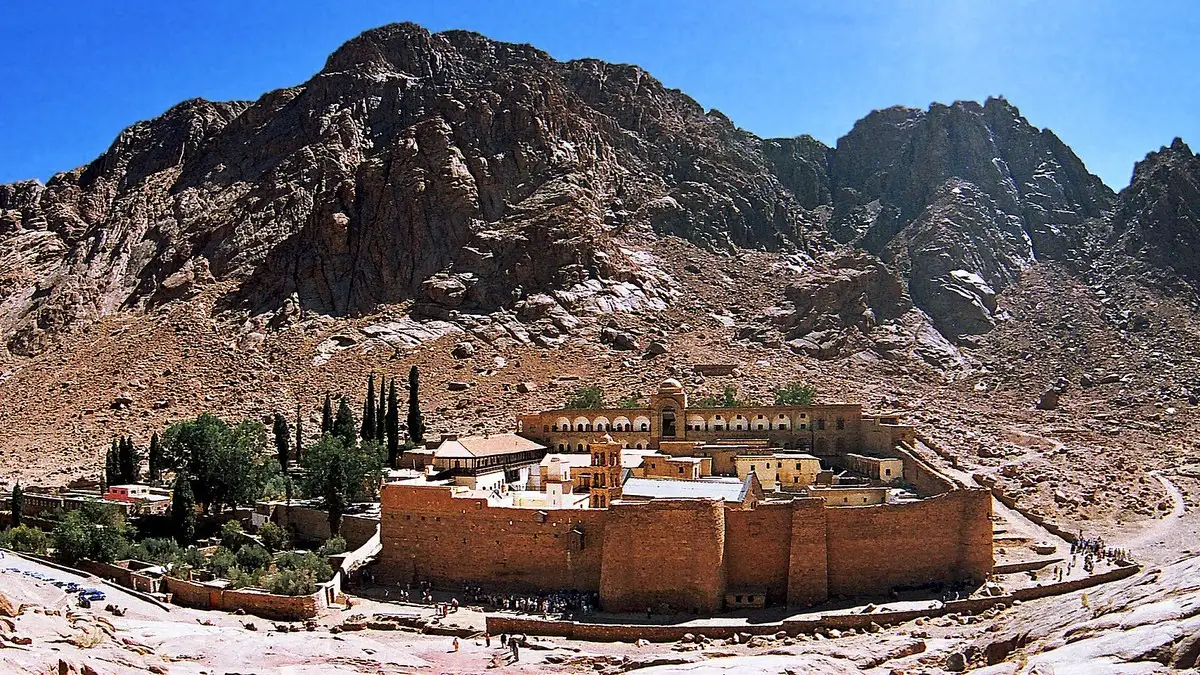
High in the granite massif of South Sinai at 1,570 meters above sea level, Saint Catherine Monastery stands beneath Mount Sinai as the oldest continuously inhabited Christian monastic complex on earth. Travelers arrive before daybreak to climb Jebel Musa for high-desert sunrise views and descend directly into sixth-century Byzantine courtyards, chapels, and manuscript galleries.
📋 Table of Contents
Byzantine Heritage Inside Saint Catherine Monastery
Commissioned by Byzantine Emperor Justinian I between 548 and 565 AD and built by architect Stephanos of Aila, the fortified enclosure used dressed red granite blocks to shelter desert ascetics around the biblical Burning Bush. Because this remote valley escaped medieval sieges and iconoclasm, its original defensive ramparts, sixth-century carved cedarwood basilica doors, and gilt apse mosaic of the Transfiguration survive intact.
Inside the stone lanes, visitors pass the Well of Moses, a tenth-century Fatimid mosque minaret standing beside the bell tower, and the living bramble revered behind the main altar. Next door, the Sacristy exhibits priceless early encaustic wax icons and rotating leaves from a historic library rivaled in antiquity only by the Vatican, documented on the UNESCO World Heritage — Saint Catherine Area register.
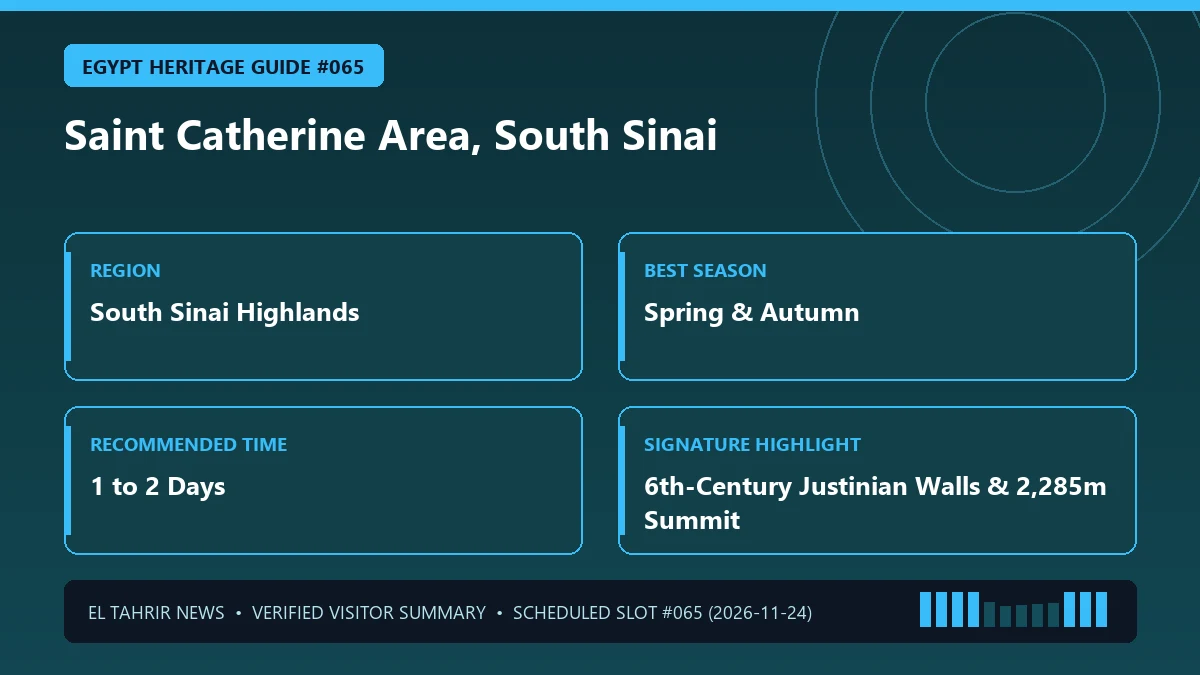
Six Official Mount Sinai Dawn Ways and Summit Routes
Reaching the 2,285-meter summit of Jebel Musa smoothly relies on six official route stages managed across the South Sinai Protectorate. Seasoned hikers pair the gentle nocturnal ascent with the steeper daylight stone staircase on the descent.
First is the Camel Trail, graded in the nineteenth century under Abbas Pasha I with wide switchbacks ideal for night walking or camel rides. Second is the Steps of Repentance, 3,750 granite boulders laid into a steep ravine by a sixth-century monk beneath stone archways. Third is Elijah’s Basin at 2,100 meters, where an ancient cypress tree marks the junction of both paths.
Fourth is the shared final climb of 750 uneven rock steps reaching the summit chapel and small mosque. Fifth is the eastern granite ridge overlook, offering unobstructed sunrise photography toward Mount Catherine away from the crowded ledge. Sixth is the morning courtyard entry window, timed so hikers descending the Steps arrive just as the monastic gate opens at 08:45 AM.
“Ascending the Camel Trail under starlight and descending the 3,750 Steps of Repentance in morning sunlight reveals the full geological drama of South Sinai while protecting hikers’ knees.” — South Sinai Mountain Conservation Briefing.
Bedouin Guides, Altitude Layers, and Night-Hike Gear
South Sinai Protectorate rules require every group hiking Mount Sinai to walk with a licensed guide from the Jebeliya Bedouin tribe, whose families have safeguarded the mountain paths and orchards around Saint Catherine Monastery for fourteen centuries. Small stone tea huts along the Camel Trail provide hot herbal drinks and heavy wool blankets near the crest.
Highland temperatures drop sharply compared with Red Sea beaches. Even when Dahab feels mild at midnight, pre-dawn winds at 2,285 meters dip near freezing from November through March. Bring a windproof jacket, thermal fleece, gloves, grippy hiking shoes, 1.5 liters of water, and an LED headlamp. Travelers mapping wider heritage trips can explore our El Tahrir News English Edition and Egyptian Museum Guide 2026: 5 Grand Giza Highlights.
📊 Key Figures & Data Summary — Visiting Logistics
Checking liturgical schedules before booking coastal transfers is essential. Overnight vans typically leave Sharm El-Sheikh around 10:30 PM or Dahab at 11:30 PM, arriving at the valley checkpoint near 01:15 AM.
| Planning Metric | Verified 2026 Reference Detail | Practical Traveler Note |
|---|---|---|
| Elevation Profile | Compound at 1,570 m; Mount Sinai summit at 2,285 m | Net vertical climb of roughly 715 meters |
| Visiting Schedule | 08:45 AM to 11:30 AM (Mon, Tue, Wed, Thu, Sat) | Closed Fridays, Sundays, and Orthodox feast days |
| Primary Trail Options | Camel Path ~6.5 km gradual; Steps ~3,750 stones | Climb Camel Path at night; descend Steps in daylight |
| Road Transfer Duration | 90–110 mins from Dahab; 2.5–3 hours from Sharm | Carry original passport for South Sinai checkpoints |
| Dress & Camera Rules | Shoulders and knees covered; silent outdoor photos | No photography inside the Basilica or Icon Sacristy |
Frequently Asked Questions About Visiting Mount Sinai
Can day visitors enter the courtyard without hiking Mount Sinai overnight?
Yes. Morning visitors arriving from Dahab, Nuweiba, or Sharm El-Sheikh on open days walk directly from the parking area along a gentle lane to the main gate between 08:45 AM and 11:30 AM to see the Burning Bush shrub, Moses’ Well, and Sacristy icons.
Which days is the monastic compound closed to travelers?
The enclosure closes every Friday, every Sunday, and on Eastern Orthodox liturgical holidays including Christmas, Epiphany, Holy Week, and the Feast of Saint Catherine, while mountain hiking trails stay open with a local Bedouin guide.
Is hiring a camel required along the nocturnal Mount Sinai route?
Camel rides are optional. Most hikers walk the graded Camel Path on foot in under three hours, while camels hired from Bedouin handlers up to Elijah’s Basin assist visitors saving energy for the final 750 summit steps.
Editorial & Visitor Disclaimer: South Sinai Protectorate entry tariffs, Sacristy museum fees, and liturgical opening hours are provided for informational purposes only and remain subject to official 2026 updates by Egyptian heritage authorities.

