
Exploring the Karnak Temple Complex on the East Bank of Luxor rewards cultural travelers with nearly two thousand years of monumental sandstone architecture, pink granite obelisks, and astronomical alignments concentrated across a two-hundred-acre sanctuary. In this 2026 field reference prepared by El Tahrir News English Edition, we map out seven essential architectural stops, morning light angles, and ticket-gate logistics for an unhurried self-guided walk.
Table of Contents
East Bank Orientation from the First Pylon to Amun-Ra
Known to ancient Egyptians as Ipet-isut, or the Most Select of Places, this ceremonial precinct evolved from Middle Kingdom foundations under Senusret I through New Kingdom imperial expansions and Ptolemaic gateways. Over thirty pharaohs added pylons, courtyards, obelisks, and shrines here along two intersecting axes running west-to-east toward the Nile and north-to-south toward Luxor Temple.
Every visit starts inside the Visitor Center, where an architectural scale model clarifies how the Precinct of Amun-Ra connects to the enclosures of Mut and Montu. Studying that model for five minutes saves considerable backtracking once you cross the open plaza onto the stone causeway.
Travelers organizing Upper Egypt itineraries alongside broader Egyptian financial and currency planning benchmarks for 2026 should note that Luxor archaeological gates accept contactless bank cards exclusively, making advance preparation essential before morning arrival.

Seven Essential Stops Inside the Karnak Temple Complex
Walking west to east lets visitors read the sanctuary chronologically while beating mid-morning excursion crowds in narrower chapels:
- Avenue of Ram-Headed Sphinxes and First Pylon: Forty criosphinx statues symbolizing Amun-Ra with miniature figures of Ramesses II between their paws guard the ceremonial approach to the 113-meter-wide First Pylon erected under Nectanebo I.
- Great Forecourt and Kiosk of Taharqa: Inside the gateway, a single twenty-one-meter papyrus column marks the Kiosk of Taharqa beside the triple barque shrine of Seti II dedicated to Amun, Mut, and Khonsu.
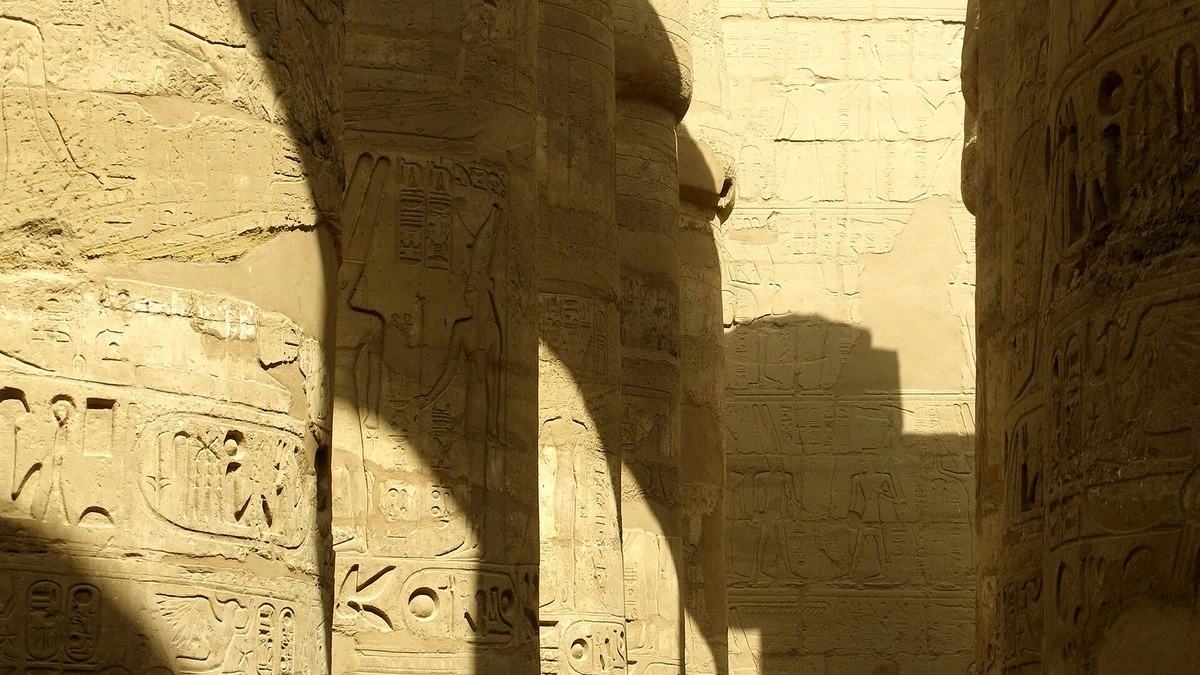
- The Great Hypostyle Hall: Between the Second and Third Pylons, 134 colossal sandstone columns rise in sixteen rows. Twelve central columns soar twenty-one meters with open papyrus capitals supporting stone clerestory grilles, while 122 side columns carry closed bud capitals retaining mineral turquoise and ochre pigment overhead.
- Granite Obelisk of Queen Hatshepsut: Beyond the Third Pylon stands Hatshepsut’s single-piece pink Aswan granite obelisk, rising nearly twenty-nine and a half meters beside the obelisk of Thutmose I.
- Festival Hall of Thutmose III (Akhmenu): Toward the rear of the central axis, inverted tent-pole columns frame the Botanical Chamber depicting Levantine flora and birds recorded during eighteenth-dynasty campaigns.
- Sacred Lake and Giant Granite Scarab: Measuring 120 by 77 meters, the stone-lined lake served nocturnal priestly ablutions and features a stepped nilometer alongside Amenhotep III’s granite scarab dedicated to Khepri.
- The Open-Air Museum Chapels: Inside the northern enclosure, archaeologists reassembled blocks recovered from later pylon cores, including the Middle Kingdom White Chapel of Senusret I and Hatshepsut’s Red Quartzite Chapel.
Inspect the northern and southern walls inside the Great Hypostyle Hall closely: Seti I commissioned delicate raised relief on the north wing, whereas Ramesses II chose deep sunk relief on the south wing so Upper Egypt sunlight sharpens every contour.
2026 Opening Hours, Ticketing, and Visitor Logistics
Travelers can confirm seasonal gate hours and exhibition notices on the official Ministry of Tourism and Antiquities — Karnak Archaeological Site portal. Essential 2026 operational details include:
| Planning Category | 2026 Operational Details | Practical Traveler Tip |
|---|---|---|
| Daytime Gate Hours | Daily from 06:00 AM to 05:30 PM | Enter between 06:15 AM and 07:45 AM for quiet Hypostyle corridors |
| Optimal Climate Season | October through April | From May to September, finish outdoor walking before 10:30 AM |
| Ticket Payment Method | Contactless Visa or Mastercard at gate or online | Open-Air Museum requires a separate supplemental ticket at entry |
| Distance from Central Luxor | 3 km north of Luxor Corniche | 10 minutes by taxi or walk south via the Avenue of Sphinxes |
| Sound and Light Show | Evening performances after sunset | Concludes on tiered seating overlooking the illuminated Sacred Lake |
Photography Light Windows and Avenue of Sphinxes Access
Photographers capture the strongest contrast inside the Great Hypostyle Hall during the first ninety minutes after dawn, when low eastern sunbeams angle diagonally through upper stone grilles without harsh midday glare. Around 04:00 PM, the eastern terrace of the Sacred Lake yields clear reflections of the pylons and obelisks across still water.
With extra late-afternoon energy, walk south from the Tenth Pylon onto the restored 2.7-kilometer Avenue of Sphinxes connecting to Luxor Temple. Breathable linen or cotton layers, cushioned closed-toe shoes, sunglasses, and bottled water keep unshaded courtyard walks comfortable.
Frequently Asked Questions for Luxor Visitors
How much time is needed to tour the Karnak Temple Complex thoroughly?
Allow three to four unhurried hours to cover the central Amun-Ra axis, Hypostyle Hall, Hatshepsut Obelisk, Sacred Lake, and Open-Air Museum without rushing.
Are personal cameras and smartphones allowed inside the courtyards?
Handheld smartphone and camera photography without tripods is free across outdoor courts and columned halls, while tripods and commercial gear require a permit.
Is the main East Bank pathway accessible for wheelchairs and strollers?
Timber and stone ramps connect the Visitor Center, Forecourt, Great Hypostyle Hall, and Sacred Lake promenade along a step-free primary route.
Visitor Advisory: Archaeological admission tariffs, Open-Air Museum supplements, and evening show schedules remain subject to updates by Egypt’s Ministry of Tourism and Antiquities; carry a contactless bank card for ticket counters.

