
Dollar Rate trading across Egypt’s regulated banking sector showed calm narrowing spreads during mid-November 2026 sessions, recovering from an early five-piaster morning dip to finish in tight interbank alignment across state and private lenders.
📋 Table of Contents
📊 Key Figures & Data Summary — Dollar Rate
| Banking Institution | Buy Rate (EGP) | Sell Rate (EGP) | Session Position |
|---|---|---|---|
| Central Bank of Egypt | 53.38 | 53.48 | Official daily weighted benchmark |
| National Bank & Banque Misr | 53.39 | 53.49 | Matched across state tier lenders |
| Banque du Caire & AlexBank | 53.39 | 53.49 | Uniform public sector liquidity |
| Commercial International Bank | 53.35 | 53.45 | Tightest major private quote |
| Abu Dhabi Islamic Bank | 53.52 | 53.62 | Highest posted tier quote |
Interbank Alignment and Dollar Rate Consistency Across Major Lenders
Official exchange screens closed November 12, 2026 with remarkable convergence among Egypt’s flagship lenders. Figures published by the Central Bank of Egypt placed the daily average at EGP 53.38 for buying and EGP 53.48 for selling. Egypt’s largest public lenders—National Bank of Egypt, Banque Misr, Banque du Caire, and Bank of Alexandria—quoted identical closing boards at EGP 53.39 buy and EGP 53.49 sell.
Private and Islamic banking desks displayed similarly narrow bandwidths, confirming healthy interbank depth. Commercial International Bank (CIB) offered the tightest level among top-tier lenders at EGP 53.35 buy and EGP 53.45 sell, while Abu Dhabi Islamic Bank topped the board at EGP 53.52 buy and EGP 53.62 sell—producing an entire top-tier spread of just 17 piasters.
Market desks noted that afternoon interbank settlement absorbed routine corporate remittance conversions without erratic spikes, reinforcing confidence that licensed commercial branches remain well supplied for both trade financing and individual foreign-currency needs. That uniform pricing floor also narrows arbitrage gaps for travel cards, overseas tuition transfers, and corporate settlement accounts across Cairo and Alexandria branches.
Five Key Market Signals From November Currency Sessions
Treasury analysts tracking cross-border trade letters highlighted five operational takeaways from the closing tape. First, early five-piaster downward pressure at market open dissipated rapidly without triggering defensive widening. Second, state-owned banks absorbed commercial import demand smoothly, keeping documentary credit queues predictable.
Third, competitive spread compression under EGP 0.20 between the highest and lowest major banks signals active currency attrition toward licensed channels. Fourth, sovereign treasury bill auctions continued attracting foreign portfolio liquidity, reinforcing net foreign reserves. Fifth, exporters and corporate treasurers relied directly on real-time CBE reference boards for invoicing.
Collectively, those five benchmarks underscore how transparent banking competition replaces speculative rumors with auditable price feeds that institutional finance departments can model across quarterly cash-flow budgets.
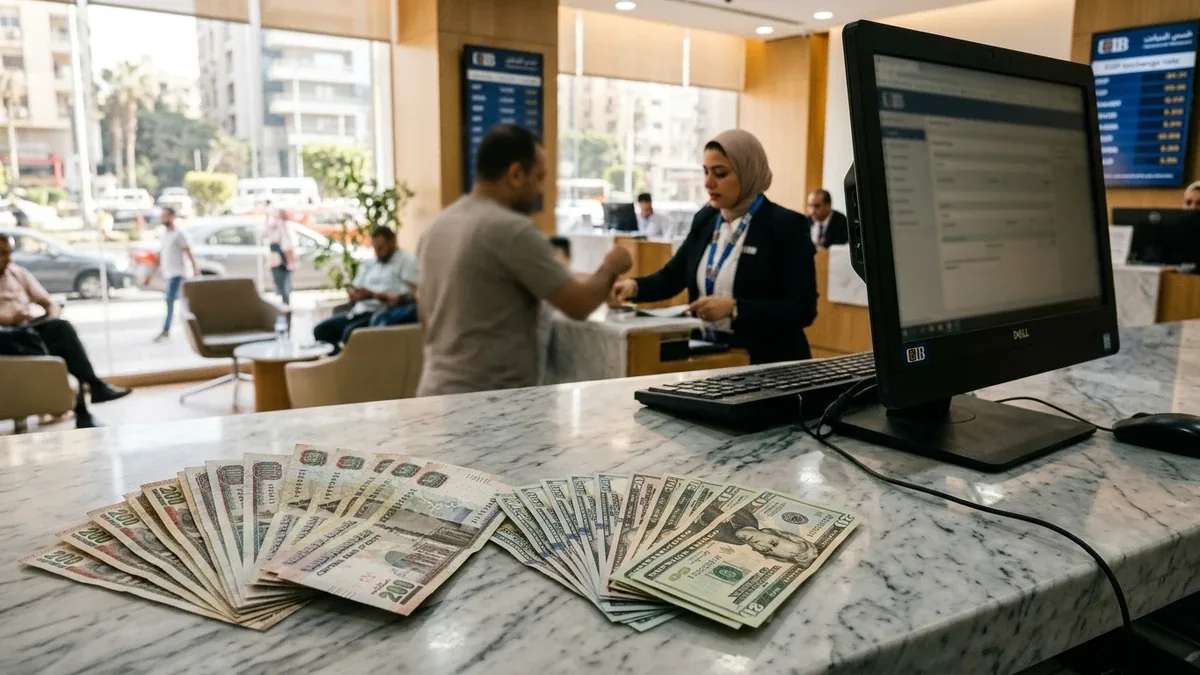
Macro Drivers Behind Foreign Currency Liquidity
Domestic foreign-exchange equilibrium rests on an interplay of capital-account inflows and global currency cycles. When global US dollar indices firm against European and Asian peers ahead of major US macroeconomic releases, emerging-market currencies naturally test modest intraday ranges.
In Egypt, non-oil export receipts, remittance transfers routed through formal banks, and steady Red Sea hospitality earnings provide structural FX buffers. Sustained transparency in official interbank pricing has discouraged parallel speculation and anchored working-capital budgeting for manufacturers importing industrial inputs and capital machinery throughout the fiscal year. Continuous monitoring of sovereign debt redemptions and foreign reserve cushions keeps interbank expectations orderly across seasonal import peaks.
“A 17-piaster spread across Egypt’s flagship public and private banks demonstrates flexible currency price discovery grounded in formal interbank supply.”
Practical Guidance for Importers and Corporate Treasurers
Financial officers managing import payables and multi-currency contracts benefit from tracking closing Central Bank settlement averages rather than reacting to early-session opening ticks. A spread difference of 10 to 17 piasters across Tier-1 institutions can generate meaningful cost savings on high-volume letters of credit and raw-material procurement contracts.
Linking corporate hedging schedules to official CBE settlement calendars also protects operating margins against external global FX volatility while maintaining strict compliance with commercial banking documentation standards and customs invoice verification rules.
Frequently Asked Questions About Dollar Rate
Where did National Bank of Egypt and Banque Misr settle in November 2026?
Both major public lenders matched Bank of Alexandria and Banque du Caire at EGP 53.39 for buying and EGP 53.49 for selling at close.
Which major Egyptian banks posted the highest and lowest quotes?
Commercial International Bank recorded the lowest major-tier quote at EGP 53.35/53.45, while Abu Dhabi Islamic Bank posted EGP 53.52/53.62.
Why is a 17-piaster banking spread considered economically significant?
Tight spreads across competing public and private lenders indicate balanced currency supply, active interbank liquidity, and transparent market clearing.
Where should importers verify official daily settlement quotes?
Businesses and individuals should rely directly on the Central Bank of Egypt statistical bulletins and licensed commercial bank clearing screens.
Related Coverage & Official Sources: Follow ongoing reporting on El Tahrir News English Edition. Reference data in this report is verified against Central Bank of Egypt (CBE).
Read Also in This Section:

